Showing posts with label children. Show all posts

November 25, 2011

My Connections to Play

Quotes that Summarize My Play Experiences:
"Those who play rarely become brittle in the face of stress or lose the healing capacity for humor."

~Stuart Brown, MD
Contemporary American Psychiatrist

"Play, while it cannot change the external realities of children’s lives, can be a vehicle for children to
explore and enjoy their differences and similarities and to create, even for a brief time, a more just world where everyone is an equal and valued participant."

~Patricia G. Ramsey
Contemporary American Educational Psychologist
Both quotes found at: http://www.thestrong.org/about-play/play-quotes
Some favorite childhood toys:
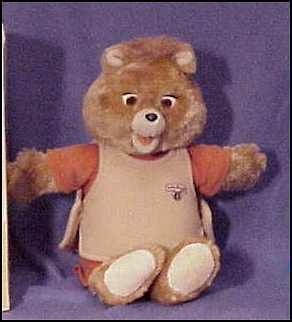
My mom always said I was an early reader. I don't attribute it to being "forced" to learn how to read, but by having play experiences that encouraged it. The Teddy Ruxpin had a cassette player in the back that would read stories aloud. The bear would also move its head, eyes, and mouth.
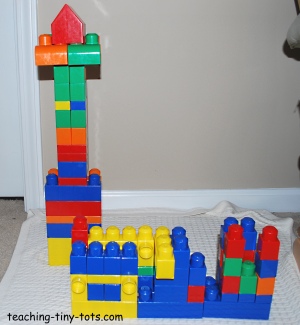
Mega bloks were also a childhood favorite. I grew up with 4 sisters and we had numerous colors, sizes, and shapes of these blocks. It was always fun to create a princess castle or fort. We would also use them in pretend play to build a hairbrush to play salon. I remember my mom getting right into the play action with us as well. She never told us that it wasn't okay to use our imaginations.
The Strawberry Shortcake ragdoll was one of my most prized possessions growing up. I am sure in my play experiences that I was a "Mommy" to her and she became a baby that I took care of when I was three to four years of age. My mother tells me I didn't like to leave the house without her. This experience was partly because I would copy my mom and what I saw her do in the house while she took care of my sisters and I. 

My Play Experiences Were Supported By:
My parents: They always encouraged my sisters and I to play outside, with each other, and with friends. We engaged in various activities - pretend play such as house, sports like softball, kickball, hide and seek, tag, and other games. 
My grandparents: Grandma frequently took my sisters and I to playgrounds and story-telling and sing-alongs at the library. My DziaDziu or Grandpa always made it a point to play with us at his house - on the swing set, in the yard, helping us learn to ride bikes, and playing with our Powerwheels cars. I always remember both grandparents encouraging our play experiences and still learning at the same time. 
Preschool Teacher: Mrs. Hidde was my Pre-K teacher when I was four years old. I attended a half-day program. Reflecting upon her program, there is not one thing I would change about how she structured the learning versus play time. All activities encouraged play whether it was creative play with shaving cream at the table or building in the blocks area with different materials. Activities supported her curriculum theme, yet never took away the importance of children playing. 
Play Today Versus Play of My Childhood

In my childhood years, I do not recall ever being told "there wasn't time to play." However, in today's society, there is such a push for academia in the early childhood years that play is becoming extinct. Even in my own classroom, I find myself debating over when to stop the children's play because we have to follow the curriculum and daily schedule. There are days when the children are playing so well that I will skip a circle time just to prolong the interactions that the children are engaging in. A teacher shouldn't have to produce an art project to show learning, so I have been taking pictures of the children's play experiences and writing about the activities to tell parents what the children are learning about through those experiences. As I learn more through my studies in the Early Childhood Studies Masters program, I am finding more information that supports letting children play and learn from those experiences, as opposed to worksheets or mandatory art projects.  I want children to be able to explore and discover in their own element just as I was able to twenty-four years ago.

The Role of Play Throughout My Life

As I reflect on the role of play as I grew into an adult, I think of all the years I played and interacted with my younger siblings. It was through these interactions that I encouraged their creativity and learning and they supported mine. By being a playmate, we built stronger relationships and supported each other's development. 
As an adult, I need to do this for my preschoolers. By getting down to their level and playing in the centers with them, I encourage their play experiences as well as model them. These play experiences will help build children's self-esteem as they will continue playing games or toys that they know about and can succeed at. It will also help build social skills as children learn turn-taking, expressive and receptive language, and how to play well and empathize with others (Dixon, 2011). 

Reference:
Dixon, E. (2011). Importance of play in child development. Retrieved November 25, 2011 from  
     http://www.child-development-guide.com/importance-of-play.html

October 15, 2011

Assessments for Children that Promote the Whole Child

The California Achievement Tests (CAT) are among the most widely used tests of basic academic skills for children from kindergarten through grade 12. The most recent edition of the CAT (the sixth) is also called TerraNova, Second Edition (or alternately, Terra-Nova CAT).
As I grew up, I took the CAT testing in grades 3 and up to measure progress in each grade level. Here is a current list of the skills tested in these assessments:


Areas TestedComplete Battery, grades 1 - 12
Gr. K-3
Gr.
4-12
Approximate Work Time
Word Analysis: matching word sounds with pictures
n/a
16-20 min.
Vocabulary: reading and knowing the meaning of words
20-30 min.
Reading Comprehension: understanding what is read in pictures, poems, sentences and stories; analyzing and interpreting context, details and main ideas
30-50 min.
Language: spelling, capitalization, punctuation, usage, and expression
50-70 min.
Study Skills : reading maps, graphs and tables; alphabetizing, using an index, the dictionary and similar reference materials ; organizing and analyzing information
n/a
24 min.
Mathematics: concepts, problems, computation
50-70 min.
Science: life, earth and space sciences
20-30 min.
Social studies: history, economics, government, geography
20-30 min.
Approximate Total working time (not including instruction time)
3-4 hrs
5-6 hrs
Taken from: http://www.pesdirect.com/cat5.html


In my opinion, these tests do not take to mind the view of the whole child. This test does not assess social and emotional skills, physical skills, and how a child interacts with the world around them. There are many aspects to how and what a child learns. I think it is easiest to assess a child through interactions and observations. By observing what a child is doing with another child or on their own, a teacher or parent can see what the child has learned. Since children learn best through hands-on experiences, an assessment can be done through observation of a hands-on activity. For example, if trying to teach a preschooler how to use scissors, it is easiest to watch the child try to use the scissors and see how their fine motor control is. For a social assessment, you can observe the children during a "Show and Tell" activity and see how they interact, share, and communicate with others. There are much better ways to assess children than use of standardized testing.


Assessments in England:

In England, schools use a form of standardized testing that is called the National Curriculum.

According to the Government of the UK, The National Curriculum is a framework used by all maintained schools to ensure that teaching and learning is balanced and consistent.
It sets out:
  • the subjects taught
  • the knowledge, skills and understanding required in each subject
  • standards or attainment targets in each subject - teachers can use these to measure your child's progress and plan the next steps in their learning
  • how your child's progress is assessed and reported
Within the framework of the National Curriculum, schools are free to plan and organise teaching and learning in the way that best meets the needs of their pupils.
According to DirectGov, "the tests won’t give you a complete picture of how your child is doing at school – they provide a “snapshot”, showing how they performed in selected parts of a subject on a particular day. But schools can use the test results as an independent measure of how they, and their pupils, are doing compared to standards across the country."


This form of testing, again, does not support the holistic view of the child. By providing only a "snapshot" of how a child performs, you are not assessing the child in all areas of development. This is sad to me, because I know how poorly I performed on standardized tests such as the SAT in the United States. However, I had mostly As in all of my coursework in the classroom. Standardized tests do not "measure up." I would like to see standardized tests take the format of something like the Ages and Stages Questionnaire that assesses children in all domains, rather than subject areas. You can learn more about the Ages and Stages here: http://agesandstages.com/


References:
http://www.pesdirect.com/cat5.html

http://www.direct.gov.uk/en/Parents/Schoolslearninganddevelopment/ExamsTestsAndTheCurriculum/DG_4016665


http://agesandstages.com/

October 1, 2011

The Impact of Disease on Childhood

Somewhere between the ages of 8 and 10, my father became seriously ill from the effects of diabetes. He did not handle this well and would not follow Doctor's orders on how to become healthier. I remember he was recommended to lose a significant amount of weight, stop smoking and exercise more. Well, he did not want to believe the Doctors. Dad would say "Those doctors do not know what they are talking about."

Fast forward a few years, my father ends up being hospitalized for a few weeks because his organs were failing and sugar levels were really high. The stress on me caused me to be hurt by my father, emotionally. I could not understand why he would not take care of himself and want to be there for me and my sisters.

Another few years would go by, and he would be hospitalized again. Only this time, for much longer than 2 weeks. Seeing my father in the hospital was heart-breaking, scary, and emotional. At this time, I became angry with my father for neglecting to listen to what the Doctors had been telling him for years. When he got out of the hospital this time, my sisters and I all told him to stop smoking, especially because he relied on the use of an oxygen tank. Did that make him stop? No! It was at this time, that I began reducing the amount of time spent with my father, because I was so upset with him. He also became very lazy, relying on my mom or sisters to help him with daily functions - putting on shoes, fixing a plate for dinner, or even getting the television remote from across the room! I could not believe it! He was giving up on every part of life... I ended up seeing a counselor throughout high school and into college because I was so angry about my father's poor lifestyle choices. 


May 16, 2010 - My father becomes ill with pneumonia, and goes into a coma because of labored breathing.  The doctors put him on a ventilator, and he is forced to breathe for a month, doing little work on his own. On June 21, 2010, my father would let go of this world and go on to Heaven with the angels and his own mother. Again, I was distraught, my Wedding was planned for April 9, 2011 and now he cannot be there to walk me down the aisle. 


Looking back, my father's choices led to a lot of sadness and depression in me that stemmed from his lack of control over his diabetes.


Poland's Stressors on Children


I chose to research stressors in Poland as that is my father's nationality. The effects of previous wars and poor government policy have led to poverty in Poland. This has led to many of the children there being abandoned at orphanages, so their parents can leave and find better opportunities in other countries, such as England. Older children that are neglected turn to running away, stealing and truancy issues. Again, problems that arise when a family is living in poor conditions. 
There are also limited play areas for children growing up in Poland as the land has deteriorated from the wars and development. 
Another stressor on children in Poland is child prostitution:
According to the Baltic Sea States Support Group, the number of children engaged in prostitution increases every year. In 1995, the number of girls 12 to 14 years of age engaged in prostitution was estimated to 100-150. The number had increased to 400 in 1996."


Sources: 
Dobbie, P. (2006 July). Polish children dumped by parents heading for Britain. Mail Online.
Retrieved October 1, 2011 from http://www.dailymail.co.uk/news/article-398233/Polish-children-dumped-parents-heading-Britain.html


The Baltic Sea States Support Group. (1998 March)Commercial sexual exploitation of children in the
baltic sea region. Retrieved on October 1, 2011 from http://www.sasian.org/legal/baltic/baltic2.htm


RIP: Daniel Kielbasa  - 9/7/1954 - 6/21/2010 -  I love you Daddy!

July 29, 2011

Sleep Loss in Children - links from the NAEYC Newsletter

http://www.sciencedaily.com/releases/2011/06/110614101122.htm

This article was recently posted in an NAEYC newsletter. It discusses the possible effects of sleep deprivation in the early years leading to ADHD symptoms later on in life for children.

You can subscribe to the NAEYC newsletter by clicking here: http://www.naeyc.org/newsroom/enewssignup

The Hundred Languages of Children: The Reggio Emilia Approach Advanced Reflections

http://www.amazon.com/Hundred-Languages-Children-Childhood-Education/dp/0893919330

"This is a great book that provides a comprehensive exploration of the Reggio Emilia approach. This approach fosters children's intellectual development through systematic focus on symbolic representation, as children are encouraged to explore their environment and express themselves through words, movement, drawing, painting, playing, and other natural modes of expression." -Amazon description about the book. I also own the second edition after attending a Reggio-inspired workshop. 

July 22, 2011

Love of Children and the Passion Within Us

     According to Louise Derman-Sparks, passion comes from within. She states that she just always loved kids, baby-sitting and playing with them.
     This is important for educators. If you do not have a love for children, you really aren't in a place to be working with them. They will also be less likely to learn in the environment created.                  

“A child cannot be taught by anyone who despises him.” ~ James Baldwin

July 8, 2011

"Just Playing"

This poem by Anita Wadley helps support the importance of play:

JUST PLAYING
When I’m building in the block room, please don’t say I’m “Just Playing.”
For you see, I’m learning as I play about balances and shapes.
Who knows, I may be an architect some day.
When I’m getting all dressed up; setting the table, caring for the babies,
Don’t get the idea I’m “Just Playing.”
For, you see, I’m learning as I play;
I may be a mother or father some day.
When you see me sitting in a chair, reading to an imaginary audience.
Please don’t laugh and think I’m “Just Playing.”
For, you see, I’m learning as I play;
I may be a teacher someday.
When you see me combing the bushes for bugs,
Or packing my pockets with choice things I find; don’t pass it off as “Just Play.”
For, you see, I’m learning as I play:
I may be a scientist someday.
When you see me engrossed in a puzzle or some “plaything” at my school,
Please don’t feel the time is wasted.
For, you see, I’m learning as I play. I’m learning to solve problems and concentrate.
I may be in business some day.
When you see me cooking or tasting foods,
Please don’t think that because I enjoy it, it is “Just Play.”
I’m learning to follow directions and see differences.
I may be a cook someday.
When you see me learning to skip, hop, run and move my body;
Please don’t say I’m “Just Playing.”
For, you see, I’m learning as I play; I’m learning how my body works.
I may be a doctor, nurse or athlete someday.
When you asked me, what I’ve done at school today,
And I say “I just played”; please don’t misunderstand me.
For, you see, I’m learning as I play.
I’m learning to enjoy and be successful in my work;
I’m preparing for tomorrow.
Today, I am a child and my work is play.