After our discussion assignments this week, I was really moved to learn more about the research relating to the importance of play in the early childhood years. Since I am focusing on the NAEYC's website for e-newsletters and current issues in the field, I thought how appropriate to read about how to effectively assess a child's play experiences to ensure learning is taking place. In perusing the January issue of Young Children, I stumbled upon an article that discusses assessment and scaffolding in make-believe play experiences (Leong & Bodrova, 2012). The research in this article continues to support the positive effects that well-developed play has on different areas of child development, such as social interactions, emerging mathematical ability, early literacy concepts, and self-regulation. The article also shows a chart that identifies stages of development within a child's play patterns. The concept explained in the chart is known as an acronym, "PRoPELS" standing for how a child Plans, develops Roles, uses Props, how long the play Extends in terms of timeframe, Language used in the play experience, and the Scenarios acted out in the make-believe play. This idea really gives educators something to focus on when observing children in their play experiences.
Something that stood out to me in this article was the idea that same-age classroom set-ups can actually hurt a child's development, whereas in mixed age groups, children can learn how to play from one another. For example, when a 3 year old and 5 year old are together in a group, the 5 year old may be able to guide the 3 year old differently than an adult might guide the play experience (Leong & Bodrova, 2012). I always thought the most benefit to children was to be within 6 months of each other in a class (since that is how our program works). However, after reading this statement it is clear that this could be an unintended consequence of this type of set-up in a program.
The NAEYC January 2012 e-newsletter also had an article that supports how politicians, neuroscientists, and economists have an impact on early childhood. I noticed a research article from the Center for Applied Research at NAEYC that discussed Kindergarten assessments. According to Snow (2011), in the last decade, policy discussions of assessment in early childhood systems have grown, reflecting the increasing demand for accountability in the elementary and secondary public education system as well as increased state funds for prekindergarten programs. This is important to reflect upon as many of my colleagues discussed in our posts that we need local politicians to listen to the research information to increase the funding in early childhood programs.
I will definitely continue to pay attention to the articles presented by the NAEYC as this class has brought me a wealth of knowledge about the importance of advocating to local politicians for early childhood program funding.
References:
Leong, D.J., Bodrova, E. (2012). Assessing and scaffolding make-believe play. Retrieved from
http://www.naeyc.org/files/yc/file/201201/Leong_Make_Believe_Play_Jan2012.pdf
Snow, K. (2011). Developing kindergarten readiness and other large-scale assessment systems: Necessary
considerations in the assessment of young children. Washington, DC: National Association for the
Education of Young Children. Retrieved January 28, 2012 from
http://www.naeyc.org/files/naeyc/file/research/Assessment_Systems.pdf
Showing posts with label play. Show all posts
Showing posts with label play. Show all posts
January 28, 2012

November 25, 2011
My Connections to Play
Quotes that Summarize My Play Experiences:
"Those who play rarely become brittle in the face of stress or lose the healing capacity for humor."
~Stuart Brown, MD
Contemporary American Psychiatrist
"Play, while it cannot change the external realities of children’s lives, can be a vehicle for children to
explore and enjoy their differences and similarities and to create, even for a brief time, a more just world where everyone is an equal and valued participant."
~Patricia G. Ramsey
Contemporary American Educational Psychologist
Both quotes found at: http://www.thestrong.org/about-play/play-quotes
Some favorite childhood toys:
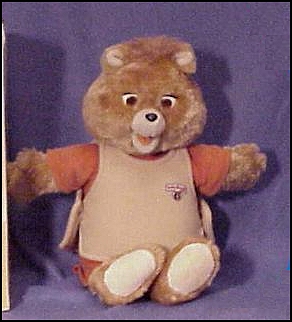
My mom always said I was an early reader. I don't attribute it to being "forced" to learn how to read, but by having play experiences that encouraged it. The Teddy Ruxpin had a cassette player in the back that would read stories aloud. The bear would also move its head, eyes, and mouth.
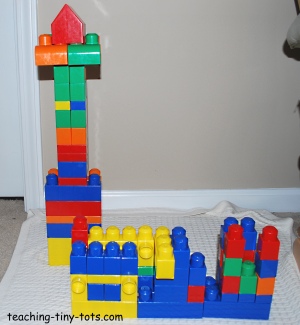
Mega bloks were also a childhood favorite. I grew up with 4 sisters and we had numerous colors, sizes, and shapes of these blocks. It was always fun to create a princess castle or fort. We would also use them in pretend play to build a hairbrush to play salon. I remember my mom getting right into the play action with us as well. She never told us that it wasn't okay to use our imaginations.

The Strawberry Shortcake ragdoll was one of my most prized possessions growing up. I am sure in my play experiences that I was a "Mommy" to her and she became a baby that I took care of when I was three to four years of age. My mother tells me I didn't like to leave the house without her. This experience was partly because I would copy my mom and what I saw her do in the house while she took care of my sisters and I.
My Play Experiences Were Supported By:
My parents: They always encouraged my sisters and I to play outside, with each other, and with friends. We engaged in various activities - pretend play such as house, sports like softball, kickball, hide and seek, tag, and other games.
My grandparents: Grandma frequently took my sisters and I to playgrounds and story-telling and sing-alongs at the library. My DziaDziu or Grandpa always made it a point to play with us at his house - on the swing set, in the yard, helping us learn to ride bikes, and playing with our Powerwheels cars. I always remember both grandparents encouraging our play experiences and still learning at the same time.
Preschool Teacher: Mrs. Hidde was my Pre-K teacher when I was four years old. I attended a half-day program. Reflecting upon her program, there is not one thing I would change about how she structured the learning versus play time. All activities encouraged play whether it was creative play with shaving cream at the table or building in the blocks area with different materials. Activities supported her curriculum theme, yet never took away the importance of children playing.
Play Today Versus Play of My Childhood
In my childhood years, I do not recall ever being told "there wasn't time to play." However, in today's society, there is such a push for academia in the early childhood years that play is becoming extinct. Even in my own classroom, I find myself debating over when to stop the children's play because we have to follow the curriculum and daily schedule. There are days when the children are playing so well that I will skip a circle time just to prolong the interactions that the children are engaging in. A teacher shouldn't have to produce an art project to show learning, so I have been taking pictures of the children's play experiences and writing about the activities to tell parents what the children are learning about through those experiences. As I learn more through my studies in the Early Childhood Studies Masters program, I am finding more information that supports letting children play and learn from those experiences, as opposed to worksheets or mandatory art projects. I want children to be able to explore and discover in their own element just as I was able to twenty-four years ago.
The Role of Play Throughout My Life
As I reflect on the role of play as I grew into an adult, I think of all the years I played and interacted with my younger siblings. It was through these interactions that I encouraged their creativity and learning and they supported mine. By being a playmate, we built stronger relationships and supported each other's development.
As an adult, I need to do this for my preschoolers. By getting down to their level and playing in the centers with them, I encourage their play experiences as well as model them. These play experiences will help build children's self-esteem as they will continue playing games or toys that they know about and can succeed at. It will also help build social skills as children learn turn-taking, expressive and receptive language, and how to play well and empathize with others (Dixon, 2011).
Reference:
Dixon, E. (2011). Importance of play in child development. Retrieved November 25, 2011 from
http://www.child-development-guide.com/importance-of-play.html
http://www.child-development-guide.com/importance-of-play.html
July 8, 2011
"Just Playing"
This poem by Anita Wadley helps support the importance of play:
JUST PLAYING
When I’m building in the block room, please don’t say I’m “Just Playing.”
For you see, I’m learning as I play about balances and shapes.
Who knows, I may be an architect some day.
For you see, I’m learning as I play about balances and shapes.
Who knows, I may be an architect some day.
When I’m getting all dressed up; setting the table, caring for the babies,
Don’t get the idea I’m “Just Playing.”
For, you see, I’m learning as I play;
I may be a mother or father some day.
Don’t get the idea I’m “Just Playing.”
For, you see, I’m learning as I play;
I may be a mother or father some day.
When you see me sitting in a chair, reading to an imaginary audience.
Please don’t laugh and think I’m “Just Playing.”
For, you see, I’m learning as I play;
I may be a teacher someday.
Please don’t laugh and think I’m “Just Playing.”
For, you see, I’m learning as I play;
I may be a teacher someday.
When you see me combing the bushes for bugs,
Or packing my pockets with choice things I find; don’t pass it off as “Just Play.”
For, you see, I’m learning as I play:
I may be a scientist someday.
Or packing my pockets with choice things I find; don’t pass it off as “Just Play.”
For, you see, I’m learning as I play:
I may be a scientist someday.
When you see me engrossed in a puzzle or some “plaything” at my school,
Please don’t feel the time is wasted.
For, you see, I’m learning as I play. I’m learning to solve problems and concentrate.
I may be in business some day.
Please don’t feel the time is wasted.
For, you see, I’m learning as I play. I’m learning to solve problems and concentrate.
I may be in business some day.
When you see me cooking or tasting foods,
Please don’t think that because I enjoy it, it is “Just Play.”
I’m learning to follow directions and see differences.
I may be a cook someday.
Please don’t think that because I enjoy it, it is “Just Play.”
I’m learning to follow directions and see differences.
I may be a cook someday.
When you see me learning to skip, hop, run and move my body;
Please don’t say I’m “Just Playing.”
For, you see, I’m learning as I play; I’m learning how my body works.
I may be a doctor, nurse or athlete someday.
Please don’t say I’m “Just Playing.”
For, you see, I’m learning as I play; I’m learning how my body works.
I may be a doctor, nurse or athlete someday.
When you asked me, what I’ve done at school today,
And I say “I just played”; please don’t misunderstand me.
For, you see, I’m learning as I play.
I’m learning to enjoy and be successful in my work;
I’m preparing for tomorrow.
And I say “I just played”; please don’t misunderstand me.
For, you see, I’m learning as I play.
I’m learning to enjoy and be successful in my work;
I’m preparing for tomorrow.
Today, I am a child and my work is play.
Subscribe to:
Posts (Atom)